
Tissue Culture Chambers
Tissue culture chambers are designed to facilitate plant research by providing uniform environmental conditions.
Tissue culture research involves the study of in vitro plant cells under controlled nutritional and atmospheric conditions; often to produce clones of plants. It is utilised across a range of industries, such as food, forestry, horticulture and pharmaceutical, to address areas where traditional propagation techniques fall short.
Most commonly, plant tissue culture chambers are used to develop techniques that can lead to large scale plant multiplication, disease elimination and overall plant improvement.
No matter your individual research or artificial environment requirements, Biora has tissue culture room and reach-in chamber options to support your needs. Our tissue culture room and reach-in chamber options offer complete environmental and temperature control, allowing for lab personnel precise control over environmental factors such as humidity and airflow.
Product Enquiry
Options For Larger Growth Chambers
If your research needs more space than a tissue culture room provides, Biora also offers larger plant growth chambers and greenhouses, which provide a separate room for your needs. These are ideal for outdoor locations.
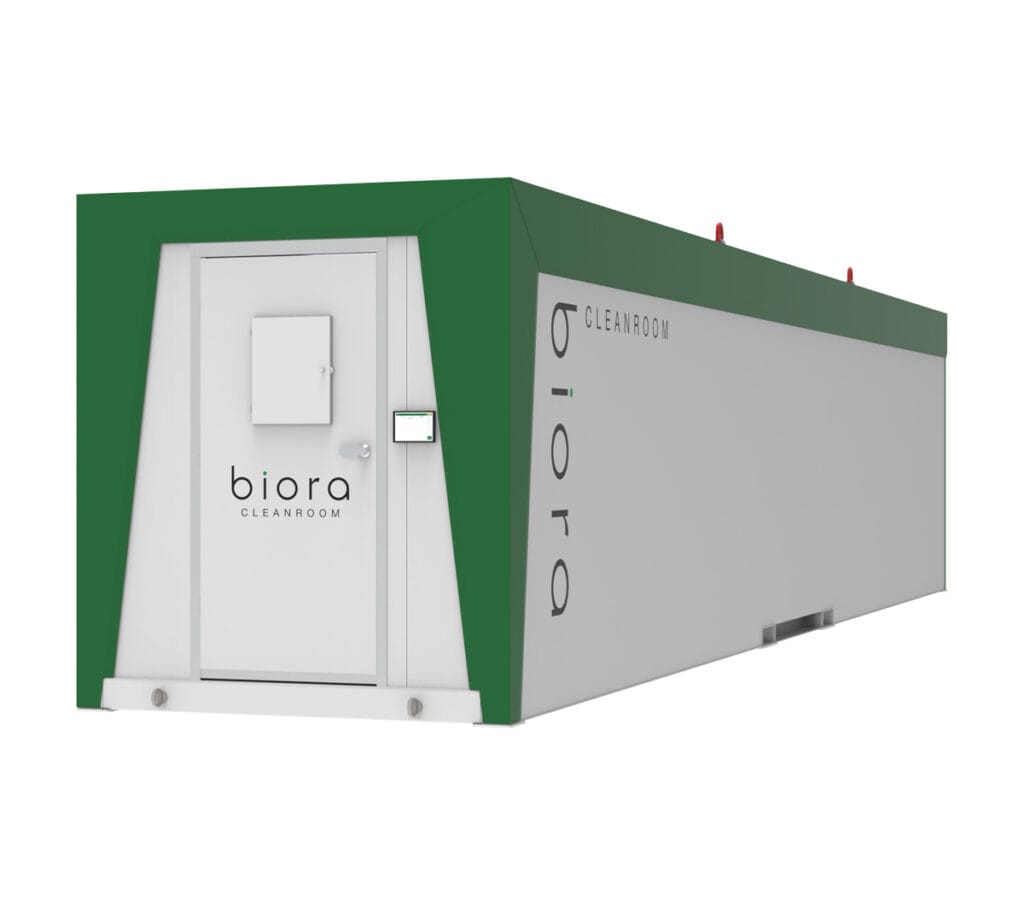
Tissue Culture Rooms from Biora offer a portable, walk-in solution to any plant research requirement. Tissue culture rooms offer institutions the ability to extend their research capabilities, whilst still meeting rigid lab requirements; without the need for civil construction.
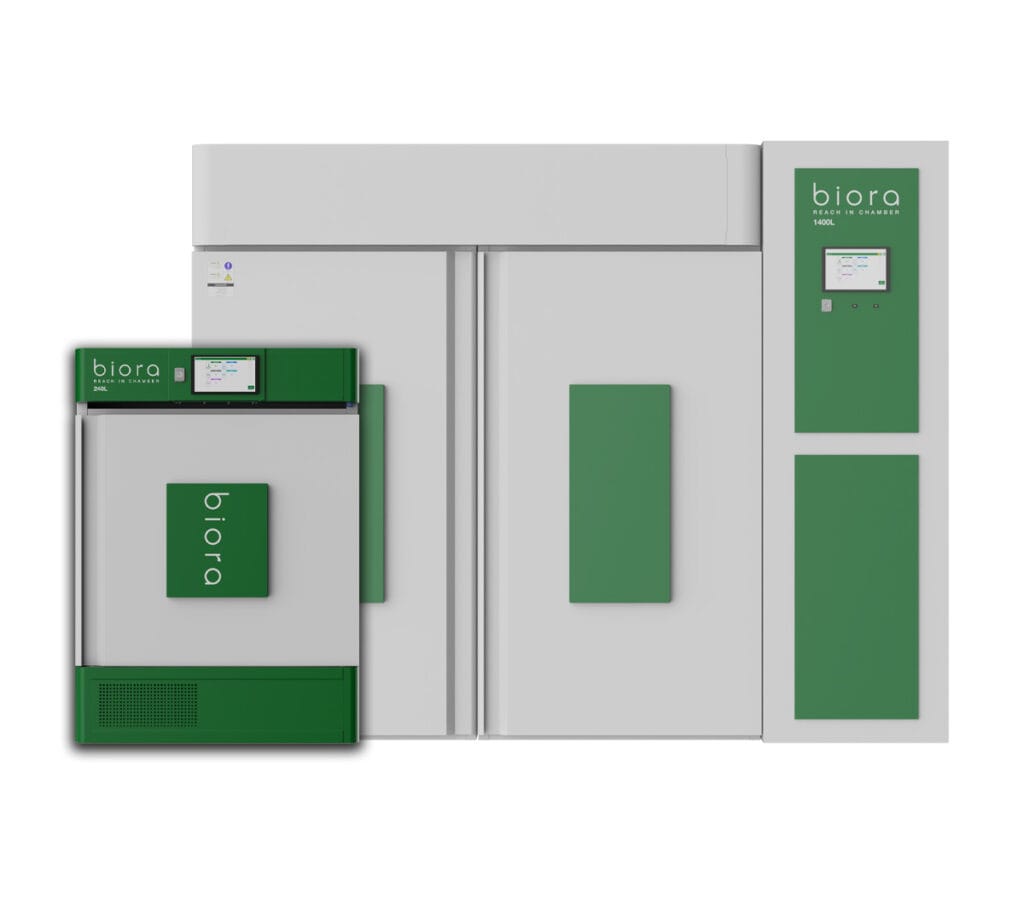
Tissue Culture Reach-In Chambers from Biora are available in a range of sizes, from 240L to 1400L. These research-grade RICs offer a selection of shelving, lighting, and atmospheric control options to best suit the conditions required for any specific tissue culture application. A reach-in chamber is an ideal solution when you require tissue culture laboratory capabilities with minimal available space.
Tissue Culture Research
Plant tissue culture research is not uncommon, nor is the use of environmental-controlled rooms or reach-in chambers to facilitate these studies.
With the world’s population expected to double by 2050 and plant disease being a significant threat to food security, reducing yield, and negatively impacting global food production, finding solutions to cope with these challenges has become a priority. Tissue culture research has led to breakthroughs in understanding and applying the fundamental knowledge gained towards improving plant growing techniques.
Tissue Culture is a form of micro-propagation designed to create large quantities of uniform and disease-free plant stock from a single mother plant using plant tissue cells. It is used in commercial and research applications to develop large quantities of existing lines or new cultivars and plant varieties. The cells are grown in nutrient rich media in culture vessels under lab conditions that are clean and provide the correct microenvironment for the plant cells to grow.
Key Plant Tissue Culture Environment Factors
There are four key factors that impact the microenvironment of plant tissue in a culture vessel:
- Light quality – Both light intensity and spectrum play an important role in the development and growth of healthy plant tissue. LED Grow lights can help to empower plant growth by providing specific light intensity.
- Gas exchange and air movement – Plants naturally photosynthesis and produce CO2. Without sufficient air exchange, this can inhibit plant growth or lead to physiological disorders. The external environment plays an important role in ensuring gas exchange and air movement.
- Temperature – Maintaining an optimal and uniform temperature is important to regulate the plants metabolic activity.
- Humidity – Excessive humidity will lead to trapped water vapour which can inhibit growth.
A closed loop tissue culture chamber or cabinet is designed specifically to manipulate the environmental conditions to optimise the growth of large quantities of commercially grown plant tissue.
Endangered, threatened and rare species have successfully been grown and conserved by micropropagation through the use of tissue culture chambers. These techniques have the potential to produce plants of superior quality; with better disease resistance and higher stress tolerance capabilities.